Buying a car in person can be daunting for the uninitiated.
For most car buyers, strolling into a car dealership can be the most nerve-wracking experience that they’ll ever feel, as it can feel like walking into enemy territory. No matter how prepared buyers are, they still have that nagging feeling in the back of their minds. These are the buyers who know what they want, have done their research and are ready to make a move on a brand-spanking new sedan, crossover, or truck. Yet, despite it all, the feeling that they’re about to get played still lingers.
Unfortunately, many buyers enter showrooms wondering whether they’ll end up paying thousands more than they should or whether the salesperson will pressure them into buying a car immediately, before they have time to think. For decades, the car dealership experience has been synonymous with stress. It’s become such a cultural touchstone that we’ve all heard the horror stories: the finance manager who suddenly “finds” extra fees, the salesperson who won’t take no for an answer, the insultingly low trade-in offer.
These aren’t hypotheticals; they’re real experiences that have shaped how Americans feel about buying cars in person. And now, new data confirms what many of us have suspected all along: the biggest problem with in-person car buying isn’t the cars themselves, it’s how you’re expected to buy them.
Eva Marie Uzcategui/Bloomberg via Getty Images
YouGov: Buyers actually want a price that is the price, no ifs, ands, or buts.
According to a recent survey conducted by well-known pollsters YouGov, Americans who’ve visited an auto dealership in the past three years want clear-cut transparency when it comes to how much they’ll spend on a car.
When asked what would make them more likely to buy a car in person at a showroom rather than online, 56% of those polled said that transparent pricing was their top motivator. Additionally, 41% of respondents said that they want online pricing to be honored in-store; essentially, this means that if a car is listed on a dealership website for $32,000, buyers should be able to get it for $32,000, plain and simple.
Apart from the actual buying process, 34% of respondents surveyed stated that they value the atmosphere and hospitality experience at the dealership, meaning they expect dealerships to have a salesperson greet them when they walk in, a designated, comfortable area to sit, and offer complimentary refreshments. Other motivators that YouGov recognized included additional benefits, such as a 48-hour return window (22%), the option of a home or extended test drive (18%), and convenient maintenance services like pick-up and drop-off (17%).
Getty Images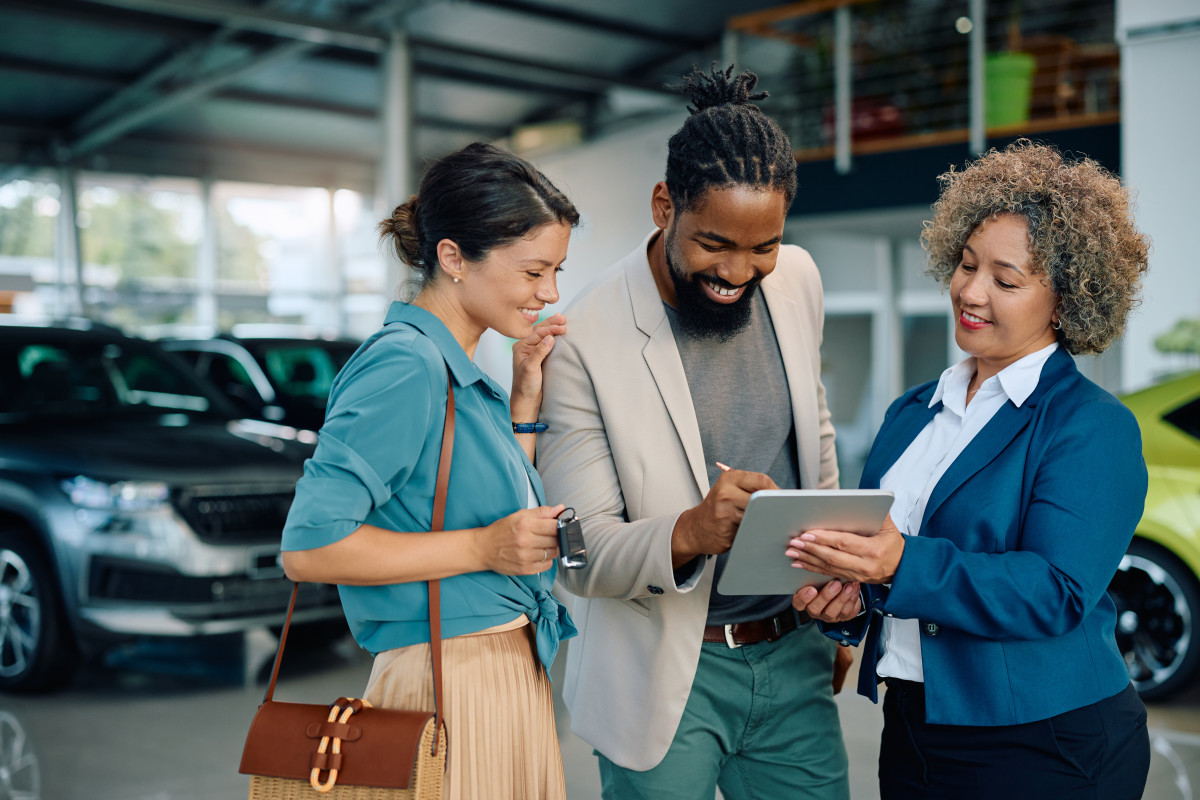
YouGov: Less than ⅓ of people actually bought a car during their last dealer visit.
Despite the stats on buyers’ motivation, the survey found that most people aren’t even visiting dealerships to buy cars. According to YouGov, just 45% of recent visitors went for servicing or repairs, making it the most common reason for visiting the dealer. Test drives came in second at 36%, while browsing models came in third at 33%. Just 29% actually placed an order or bought a vehicle during their most recent visit.
However, in terms of their actual visits, recent visitors have generally found them favorable. Over 72% of those surveyed described their most recent visit as positive, which includes 34% who said that it was ‘very positive’ and 38% who said that it was ‘somewhat positive’.
Among recent visitors who said the in-store experience is very important to them, the consensus on a positive visit is simply having no pressure to make a purchase. Over 54% of those surveyed cited this as crucial, while 47% found transparent pricing and financing important, and 46% valued knowledgeable and helpful staff.
On the flip side, when these same buyers were asked what ruins the experience, 52% said that a one-way or aggressive sales approach hurts their visits. Right behind that, 40% said that prices or fees not being clearly explained made their in-store experiences negative, as well as unnecessary add-ons being pushed too hard.
Related: Ford Is Redesigning Dealers to Make Car Buying Feel Easier
Final Thoughts
Despite platforms like Carvana and established names like Hertz continuing to grow by offering transparent, pressure-free alternatives, traditional dealerships, 84% of recent dealership visitors surveyed by YouGov say the in-store experience is at least somewhat important to them.
Customers are not abandoning physical retail; they still want to touch, see, and test-drive cars. They want knowledgeable staff who can answer questions about the vehicles and make a potentially life-changing decision without the salespeople breathing down their necks for an immediate sale.
As a bona fide car enthusiast, I believe that seeing cars up close is an essential part of the car-buying process. Cars are a significant purchase for many Americans, which justifies the need for a “touch-and-feel” retail experience. However, this experience should be as seamless as possible, and the sooner customers recognize their power, the sooner the dealership experience can be reformed.
