As we prepare to usher in the new year, we take a moment to salute some of the key figures from the world of motorsport that we farewelled in 2025, listed in chronological order of their passing.
EDDIE JORDAN
Eddie Jordan (1948-2025) had a respectable career as a driver before forming his own team, Eddie Jordan Racing, to compete in F3, and later, F3000. The team enjoyed success with the likes of Martin Brundle, Johnny Herbert and Jean Alesi before Jordan switched his attention to Formula 1.
He founded Jordan Grand Prix in 1991, and under his watch the team earned four victories and achieved a best finish of third in the constructors’ championship in 1999. It also gave Michael Schumacher his F1 debut at Spa in 1991, where the German’s achievement of qualifying seventh made such an impression on the rest of the paddock that Benetton swooped in and signed him before the next race.
Jordan remained at the helm throughout until the team was purchased by the Midland Group at the end of 2005, and the Jordan Grand Prix name was replaced on the grid by MF1 Racing for 2006.
After his time as a team boss came to an end, Jordan remained engaged with the sport through a variety of broadcast and media roles.
SHIGEAKI HATTORI
Japanese-born Shigeaki Hattori (1963-2025) spent virtually his entire professional racing career in the United States. He moved from Japan after winning the Formula Toyota title in 1994 and began racing in Indy Lights as a 32-year-old in 1995.
Hattori made the step up to CART in 1999 with Bettenhausen Motorsports, making seven starts before having his competition license revoked after one incident too many. A switch to the IRL followed, where he made sporadic appearances with various teams between 2000 and 2003. A stint in NASCAR’s Truck Series followed before he stepped out of the cockpit and into the team owners’ chair, founding Hattori Racing Enterprises. The team was initially focused on NASCAR’s Truck Series, later adding part-time Xfinity Series and ARCA Menards Series programs. The high point came in 2018, when Brett Moffitt won the Truck Series championship and HRE won the teams’ title.
HRE ran its last full-time season in 2023 and closed its doors in 2024, while Hattori also fielded entries under the Hattori Motorsports banner in the GT4 America Series in 2022.
LEE KUNZMAN
Lee Kunzman (1944-2025) had a career defined by overcoming adversity. A USAC star in the late 1960s, the Iowan had just padded his resume with another win – the 1970 Night Before the 500 at IRP – when he suffered a massive crash at I-70 the following week. He sustained multiple fractures and burns to 40 percent of his body, but returned in 1971 to commence a new chapter of Sprint Car success between 1971 and 1973. During this period he also made his first starts in the Indianapolis 500, finishing 17th in 1972 and improving to seventh in 1973. But then disaster struck again later that year when he crashed during a tire test at Ontario Motor Spwedway, sustaining severe head injuries and paralysis to the left side of his body that sidelined him for the entirety of 1974. He returned in 1975 with an inspiring fourth at the Ontario 500-mile race, and later added another two Indy starts in 1977 and ’79.
While seventh proved to be his best Indy 500 finish as a driver, he fared rather better as a team manager – he was part of the Hemelgarn Racing team that won the race in 1996 with Buddy Lazier, followed up with the championship in 2000.
Kunzman was inducted into the National Sprint Car Hall of Fame in 2006.
ED PINK
Ed Pink (1931-2025), nicknamed “The Old Master,” was the preeminent drag racing builder from the 1960s through the 1970s and beyond. The reputation he gained through the power and reliability of the blown fuel drag engines that came out of the Ed Pink Racing Engines shop eventually led to expansions into other forms of racing, including Can-Am and F5000.
His company was also involved with converting the Cosworth DFV F1 engine to the turbocharged, methanol-burning DFX that was the thing to have at Indy for the best part of a decade, and created a footprint in the sports car world with programs such as ex-Top Fuel racer Jim Busby’s Porsche 962. Later, a change in focus to USAC engines yielded 10 championships and more than 100 wins in series ranging from midgets to Silver Crown cars.
JOCHEN MASS
Jochen Mass (1946-2025) enjoyed a long career that delivered success in both Formula 1 and sports cars. On the F1 side, the German made 105 starts from 114 entries with the likes of Surtees, Arrows and March, although his most fruitful period came during a three-year stint with McLaren between 1975 and 1977. During that time he scored his only grand prix win (Spain 1975), although a pattern of either finishing well or not finishing at all at the other races meant he ended the year eighth in the points.
His sports car career somewhat overlapped his Formula 1 activities: his first start at the 24 Hours of Le Mans came in 1972 – the year before his F1 debut – and after another one-off appearance in 1978, he became a La Sarthe regular between 1981 and 1991, missing only the 1984 and 1990 events. The highlight was his outright win alongside Manuel Reuter and Stanley Dickens in the Team Sauber Mercedes C9 in 1989, which improved upon his second place from seven years earlier in the Rothmans Porsche 956 he shared with Vern Schuppan.
Mass shared the victory at Le Mans in 1989 with this Team Sauber Mercedes C9/88. Getty Images
Other notable victories included his 1987 12 Hours of Sebring win with Bobby Rahal.
Later in his career he became a mentor to the Mercedes young driver stable, and drove the Mercedes-Benz museum cars. He also dabbled in the media as part of the F1 broadcast team for German outlet RTL during the 1990s.
ED DELPORTE
Ed Delporte (1971-2025) was one of the original employees at Ed Carpenter Racing, and the electronics engineer remained with the team until his death from pancreatic cancer in June. The Indiana native – who the team noted attended 13 Indy 500s as a fan before working at the next 30 – was celebrated at this year’s edition of the 500 with a tribute sticker on the ECR cars.
WALKER EVANS
Walker Evans (1938-2025) was one of off-road racing’s all-time greats, with 12 championships and 142 victories – including multiple wins at the Baja 500, Baja 1000, Fireworks 250, Mint 400 and Parker 400 – all contributing to his apt nickname “The Legend.”
Later in his career he also tried his hand in NASCAR’s Truck Series as an owner/driver, making 41 starts between 1995 and 1996, and earning four top 10 finishes.
Evans is a member of the Off-Road Motorsports Hall of Fame (inducted in 2004), the Motorsports Hall of Fame of America (2015) and the West Coast Stock Car Hall of Fame (2017).
CHRIS RASCHKE
Chris Raschke (1964-2025) was a prominent figure on the Land Speed Record scene. His motorsport career spanned more than four decades, dating to when got his start in racing at the age of 16 as the first official employee at Ventura Raceway. After a stint racing ATC three-wheelers and a Ford Pinto in mini stocks, his aptitude for fabrication and car preparation led to an invitation to join Kenny Duttweiler’s team – a move that led to his working on everything from drag racing engines to boats – and eventually opened the door for him to join the Speed Demon squad. He took over as the Speed Demon’s driver following the death of George Poteet in 2024.
ROBBIE BREWER
Robbie Brewer (1971-2025) was a veteran in stock car racing’s Sportsman Division who made 311 starts across various series at Bowman Gray Stadium, picking up 11 wins and the 2011 division title at the track.
HUMPY WHEELER
Howard Augustine “Humpy” Wheeler (1938-2025) was a track promoter who helped elevate NASCAR onto the national stage with his outrageous pre-race shows and wrote new standards for track facilities. During his 30+ year stewardship of Charlotte Motor Speedway, the track became the first of its size to feature racing under lights – a move that spurred other tracks to follow suit, and paved the way for night racing to become a regular element of the NASCAR schedule.
.jpg)
Wheeler ranks among the most inventive race promoters of all time. HHP/Harold Hinson photo
In addition to overseeing Charlotte Motor Speedway, Wheeler was president of SMI, the group that owned and operated several other NASCAR tracks, and he was instrumental in the creation of the popular Legends cars that continue to race in regional events around the country.
Wheeler is in the International Motorsports Hall of Fame (2006), the Motorsports Hall of Fame of America (2009), and in a nod to an earlier chapter in his career when he very nearly took up professional boxing, the Carolinas Boxing Hall of Fame.
BARRY BOES
Barry Boes (1971-2025) was a longtime competitor in Trans Am’s CUBE 3 Architecture TA2 Series, clocking 89 starts across the National and Western Championships, and winning the TA2 Series Pro/Am Challenge in 2024 off the back of seven wins. He was leading the points in the 2025 TA2 Pro/Am Challenge at the time of his death in a plane crash in August.
Away from the track, he was a graduate of Mississippi State University with a degree in computer engineering who founded software company Accio Data in 2005, and was its president.
ROBERT CLARKE
Robert Clarke (1949-2025) was instrumental in the formation of Honda Performance Development (HPD), the American motorsports arm of Honda that is known today as HRC US.
In addition to helping draw up the plans for Honda’s entry into CART in the 1990s, Clarke also helped develop the facility in Torrance, Calif., where the first 2.65-liter turbo V8s would be maintained. While the first engines, codenamed the HRX, made a subdued start, their successor, the lighter and more powerful HRH, made a far better impression. Before long, Honda attracted the attention of Chip Ganassi Racing and the two entities teamed up to dominate the 1996 CART season and open the floodgates for Honda success.
Clarke spent 15 years with HPD, his last major act being to launch Acura’s factory LMP2 program in the American Le Mans Series. His post-Honda career included serving as CEO of the de Ferran Motorsports ALMS LMP2 team, as well as two years as president of SCCA Pro Racing.
He was also actively involved in STEM mentorship initiatives, and created the EarthPrix concept, which aimed to promote the viability of future road car tech via a series of automotive challenges designed to encourage innovation without the constraints of race series regulations.
BILL DAVIS
Bill Davis (1951-2025) used the fortune he made in trucking to start a NASCAR team. Bill Davis Racing competed in all three national series during its two decades in operation, and established itself as a competitive force during the 1990s and early 2000s. The high point came when it won the Daytona 500 with Ward Burton in 2002, ending a 28-year Daytona drought for engine partner Dodge in the process.
Financial difficulties and a falling-out with Dodge eventually led to the team being sold to Triad Racing Technologies in 2008, which closed the racing department and now produces chassis and engines for some Toyota teams.
LES UNGER
Les Unger (1943-2025) was the long-time manager of Toyota’s American motorsports programs. During his 30 years at the helm, he directed the company’s involvement in IndyCar, IMSA, NASCAR and NHRA competition, as well as USAC, NORRA and SCORE off-road programs.
His imprint was wide: he was instrumental in Toyota’s long-time sponsorship of the Long Beach Grand Prix, as well as the immensely popular Pro/Celebrity Race that went along with it for years. Unger also supported Toyota’s gradual entry into NASCAR, and backed the Toyota Atlantic Championship that bred an entire generation of American open-wheel stars. He retired from his position of national motorsports manager in 2014.
AL SPEYER
Al Speyer (1952-2025) played a massive part in leading Bridgestone/Firestone’s successful return to American open-wheel racing. A mechanical engineer by training who remained with Firestone for nearly 40 years, Speyer and colleague Joe Barbieri dipped their toes in the water by signing Firestone up as sole tire supplier to the Indy Lights series in 1990, and stepped up to face old rival Goodyear in CART in 1995, and the IRL the following year.
Its first CART championship came in 1996, and the company locked Goodyear out of the head-to-head fight every year after that. On the IRL side, the first title came in 1999. Goodyear bowed out, and Firestone has remained as the sole supplier to the now-unified IndyCar Series ever since.
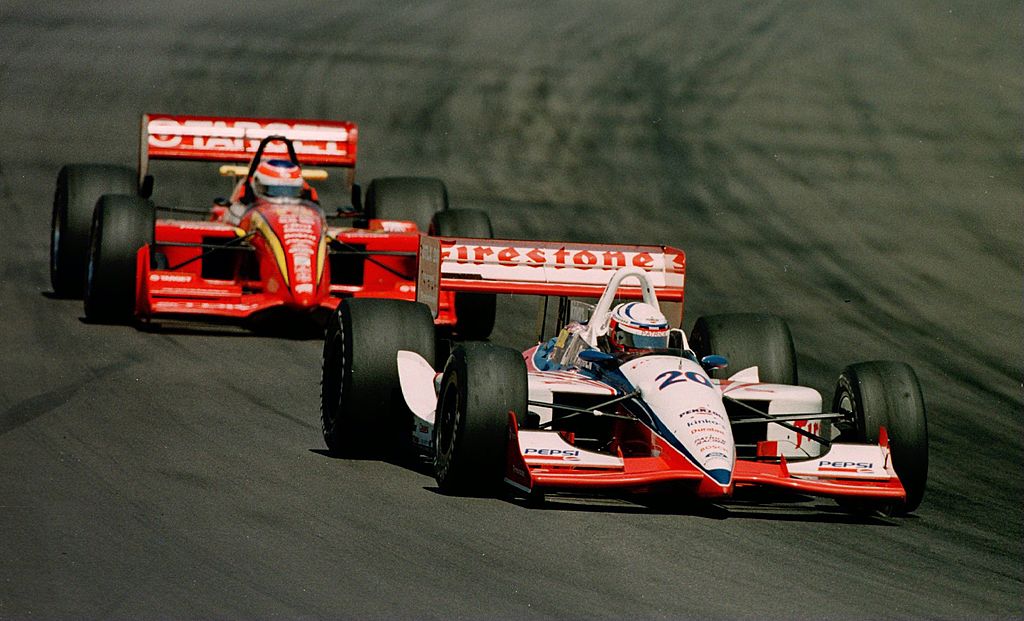
In the mid-1990s, Speyer quickly led Bridgestone/Firestone into a position of IndyCar dominance that remains unchallenged since. Jamie Squire/Alls/Getty Images
Off the back of his achievements, Speyer was promoted to executive director of motorsports for Bridgestone Americas in 2001, and held the role until he retired in 2012.
ALLAN PAGAN
Allan Pagan (1955-2025) was one of the original Indy Racing League entrants. The Pagan Racing team, which Allan formed with father Jack, got its start when they bought the equipment of Kenny Bernstein’s defunct King Racing team and fielded a car for Jeff Andretti at the 1993 Indy 500.
They continued to make one-off entries for the next couple of years before diving full-time into the IRL following the open-wheel split. They initially enjoyed modest success with veteran Roberto Guerrero, but a change to Infinity engines for 1997 set the team back, and forced a mid-season engine change to Oldsmobile.
The exit of sponsor Pennzoil – which decamped for the new Panther Racing team formed by ex-Pagan crew chief John Barnes – in 1998 led to the exit of Guerrero and a truncated season, however it returned in 1999 with backing to run Jeff Ward at Indy. Ward’s second places at Phoenix and the Indy 500 were the team’s best results, but the rest of the year delivered just two more top 10s. Pagan Racing returned for a final run at the 500 in 2000 with Richie Hearn before closing its doors.
MICHAEL ANNETT
Michael Annett (1986-2025) was a NASCAR driver who spent the majority of his career in the-then Xfinity Series, where he made 321 starts over 11 years. He picked up 95 top 10s along the way, although his only win came at Daytona in 2019 with JR Motorsports – the team with which he spent nearly half of his career.
He also ran three full seasons in the Cup Series between 2014 and 2016 with Tommy Baldwin Racing and HScott Motorsports, as well as occasional appearances in the Truck Series.
Annett retired from racing after a frustrating 2021 Xfinity Series season in which he was forced to miss several races with a broken femur, and then three more when the leg was reinjured.
BILL HUSKINS
Bill Huskins (1925-2025) served in the Army Signal Corps and US Navy before entering NASCAR in its inaugural year in 1948, and was believed to be the last surviving starter from the series’ first season when he died in October at age 100. Huskins competed in a handful of NASCAR Modified National Championship events, but his day job was as a member of the N.C. Highway Patrol, which he joined in 1951. He retired as a lieutenant 34 years later. As a Highway Patrol Technical Sergeant, he won a first prize at the 1971 International Film Festival of New York for his feature-length film about road safety.
NANCY WAGER
Nancy Wager (1949-2025) was Chevrolet’s longtime Trackside Communications Representative. Already an accomplished communications professional when she joined GM, her journey with the Bowtie began in in 1995 when she built both the off-road truck racing and stadium truck racing trackside public relations programs with GM/Chevrolet and Jimmie Johnson.
Later she teamed up with fellow Chevrolet Trackside Representatives Sam Brown and Judy Kouba Dominick to form Inside Track Communications, where she led the NASCAR Cup program until her retirement in 2021.
JON EDWARDS
Jon Edwards (1972-2025) was a communications professional whose career in NASCAR spanned more than 30 years.
Early stints at North Carolina Motor Speedway and marketing agency Performance PR Plus eventually led to his becoming longtime PR representative for Jeff Gordon. Edwards officially joined Jeff Gordon Inc in 2011, and later become a key figure at Hendrick Motorsports. Most recently, he held the role of director of racing communications at Hendrick, and worked closely with Kyle Larson.
ANDREA de ADAMICH
Andrea de Adamich (1941-2025) participated in 34 Formula 1 Grands Prix for an array of teams between 1968 and 1973. His debut came with Ferrari in South Africa in 1968 in what would prove to be his only start for the Scuderia, but his only points finishes came later with a pair of fourth places (Spain 1972, Belgium 1973) with Surtees. Severe leg injuries sustained in a multi-crash at the start of the 1973 British GP brought a premature end to his F1 career. De Adamich also dabbled in sports cars, winning two races in the 1971 World Sportscar Championship in an Alfa Romeo T33/3 (pictured, top of page) and finishing fourth at Le Mans in 1972.
Following his retirement, de Adamich become a TV pundit and commentator in his native Italy, and he was also involved with the Alfa Romeo-affiliated racing organization N.Technology.
ALLAN MOFFAT
Allan Moffat (1939-2025) was one of the icons of Australian touring car racing. Sitting mostly on the Ford side of the Ford/Holden rivalry that defined Australian touring cars for years, Moffat was a four-time winner of the Australian Touring Car Championship, a six-time winner of the Sandown 500, and a four-time winner of the Bathurst 1000/500. He was one of only two drivers to have won at Bathurst in both the 500km and 1000km formats.
Canadian-born, Moffat also made his mark internationally with victories at the 24 Hours of Daytona in 1982, driving a GTU class Mazda RX-7 he shared with Kathy Rude and Lee Mueller, an outright win at the Sebring 12 Hours in 1975 as part of BMW’s line-up, a Div.3 class win at the Spa 24 Hours in a Group A Holden Commodore, and a sixth at Le Mans in the IMSA GTX class in 1982, when he drove a Mazda RX-7 with Yojiro Terada and Takashi Yorino.
His last race as a driver – which he won – was the InterTEC 500 at Fuji in 1989. But he’d also been a team owner for years, and continued in that capacity with Allan Moffat Enterprises, which ran Ford Sierra RS500s until the end of the Group A era in 1992. He continued to field cars on a one-off basis at Sandown and Bathurst for another four years, and also dabbled in TV commentary.
GREG BIFFLE
Greg Biffle (1969-2025) had a long career in NASCAR, most notably as driver of Roush Fenway Racing’s No. 16 Ford between 2002 and 2016. He made 515 Cup Series starts over 16 years, picking up nine wins, 175 top 10s and 13 poles. His best championship finish in Cup was second to Tony Stewart in 2005, although he did win titles in the then-Busch Series (2002) and Truck Series (2000). Biffle’s full-time Cup career ended in 2017, although he returned to make a handful of starts with NY Racing Team in 2022. He also kept busy with other forms of racing, making 10 appearances over three years in Stadium Super Trucks, and nine appearances over the same period in SRX.
Outside of racing, he was widely recognized for his disaster relief work in the aftermath of Hurricane Helene, which devastated Asheville and other communities across Western North Carolina in 2024. Biffle used his helicopter to make repeated visits to sites across the region, many of which were difficult to access due to the terrain, and delivered supplies and aid.
